Interest in stratospheric parachute jumps was rekindled by Felix Baumgartner, who planned to jump from an altitude of 36 kilometers.
On Tuesday, 9 October 2012, Baumgartner had to postpone his jump even though he had already climbed into the balloon capsule. An unexpected gust of wind, reaching approximately 40 km/h, twisted the balloon’s delicate envelope and pushed it against the ground, forcing the team to delay the launch.
Five days later, on 14 October 2012, Felix Baumgartner successfully completed his record-breaking jump. During the descent, which included 4 minutes and 20 seconds of freefall, he broke the sound barrier.
Baumgartner reported that he began spinning during the jump, creating a potentially dangerous situation, but managed to stabilize his body. “The jump turned out to be more difficult than I expected,” he said after landing.
He also said that he did not feel himself crossing the sound barrier, although the instruments recorded it. Baumgartner became the first person to break the sound barrier during a freefall parachute jump. Congratulations to him on this extraordinary achievement. His records were subsequently ratified by the Fédération Aéronautique Internationale (FAI).
Below is a list of ten people associated with high-altitude parachute jumps, including record holders, pioneers, unsuccessful attempts and one high-altitude bailout that was not a stratospheric parachute jump in the strict sense.
1 Felix Baumgartner
 On 14 October 2012, Austrian skydiver Felix Baumgartner jumped from an altitude of 38,969.4 meters and landed safely near Roswell, New Mexico, USA. During freefall, he reached a maximum speed of 1,357.6 km/h, or approximately Mach 1.25.
The jump was the culmination of the Red Bull Stratos project, which aimed to study human freefall at extreme altitudes and set new records. Baumgartner’s achievement surpassed Joseph Kittinger’s 1960 record for the highest parachute jump, although Eugene Andreev’s record for the longest freefall without a stabilizing drogue parachute remained intact.
In January 2010, Baumgartner announced his partnership with Red Bull and his intention to jump from approximately 120,000 feet (36.6 kilometers). The successful 2012 jump exceeded that planned altitude and made him the first person to break the sound barrier in freefall without the protection or propulsion of a vehicle.
2 Eugene Andreev
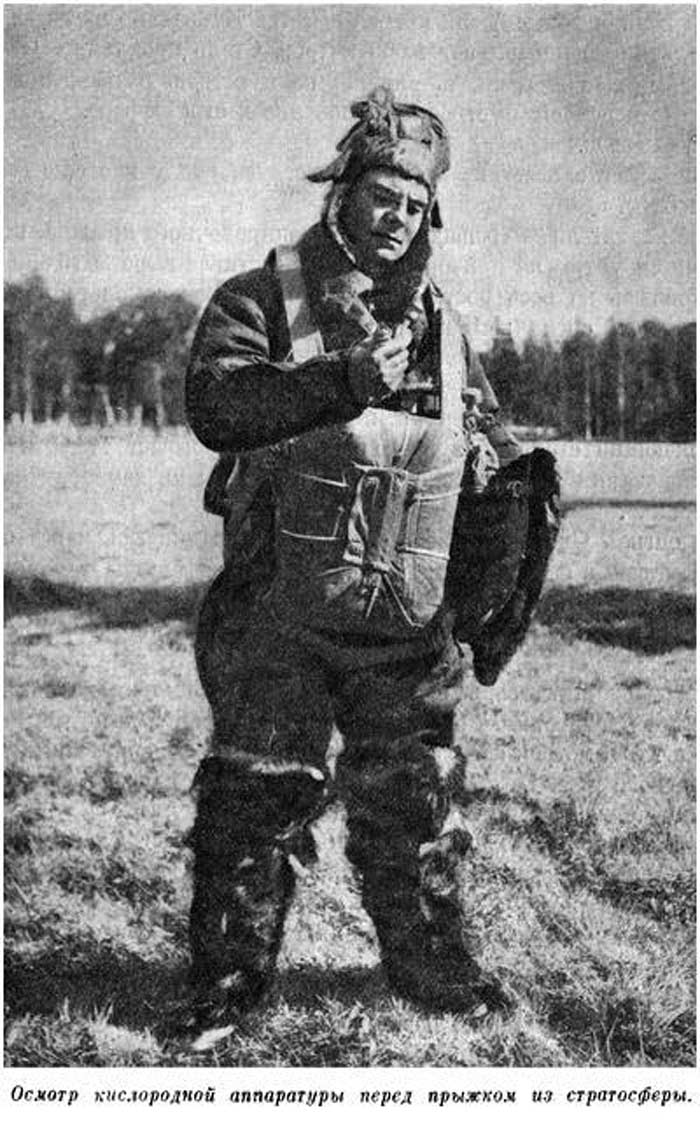 On 1 November 1962, Soviet parachutist Eugene Andreev jumped from a balloon at an altitude of approximately 25,458 meters. He completed 24,500 meters of freefall before opening his parachute at around 958 meters above the ground.
Andreev established the FAI-recognized world record for the longest freefall parachute jump without a stabilizing drogue parachute. His achievement remains an important milestone in the history of high-altitude parachuting.
3 Joseph Kittinger
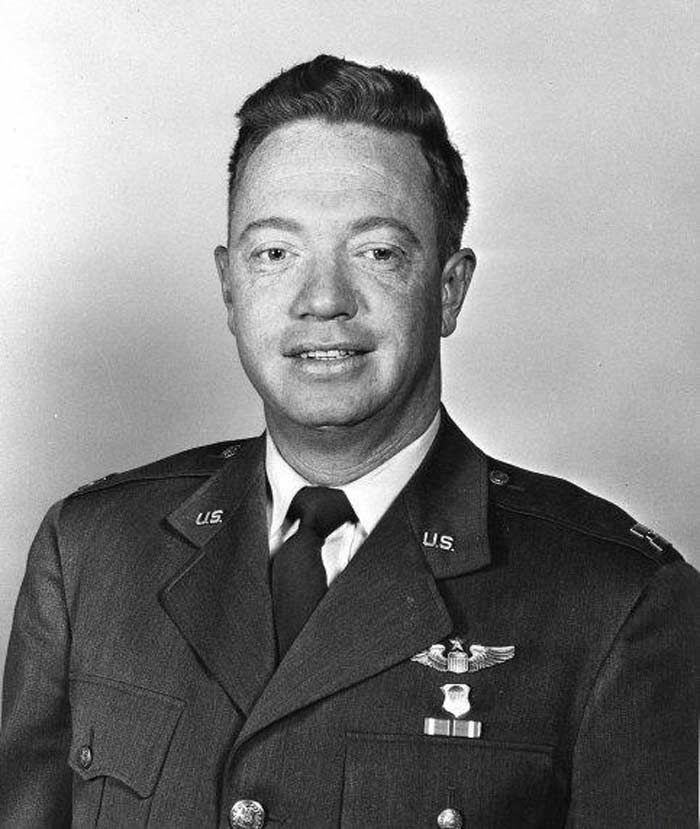 As part of Project Excelsior, American Air Force captain Joseph Kittinger completed three high-altitude parachute jumps. His first jump took place on 16 November 1959 from an altitude of approximately 23,300 meters. A malfunction prevented his stabilizing parachute from deploying correctly, sending him into a dangerous spin. His body rotated at around 120 revolutions per minute, exposing him to severe forces and causing him to lose consciousness. His main parachute deployed automatically, saving his life.
On 11 December 1959, Kittinger made a second jump from approximately 22,760 meters. His final jump took place on 16 August 1960, when he stepped from an open gondola suspended beneath a balloon at an altitude of approximately 31,333 meters.
He fell for about 4 minutes and 36 seconds before his main parachute opened, reaching a maximum speed of approximately 988 km/h. A pressure failure in his right glove caused his hand to swell painfully.
The jump established several records, including the highest successful parachute jump at the time and the longest freefall. His achievement also demonstrated the importance of stabilizing parachutes in preventing dangerous spins during high-altitude descents.
4 Pyotr Dolgov
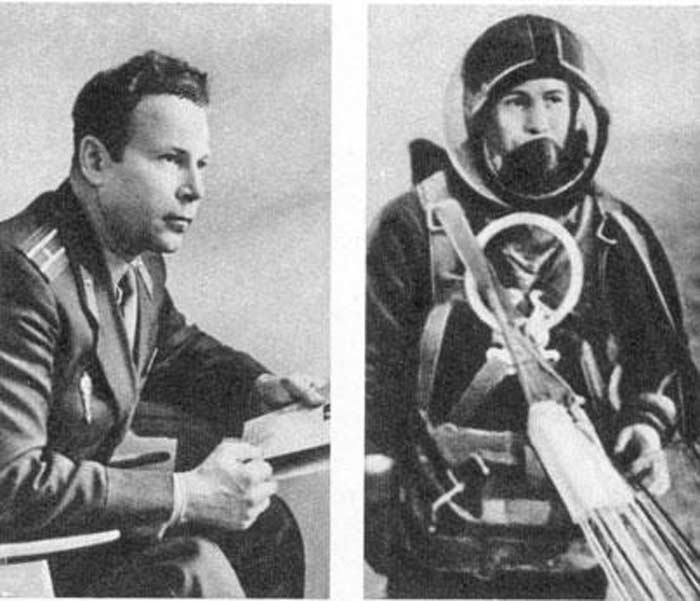 On 1 November 1962, Soviet parachutist and test officer Pyotr Dolgov participated in a high-altitude jump from the Volga balloon alongside Eugene Andreev. The jump took place at an altitude of approximately 25,600 meters.
Dolgov was wearing a pressurized suit designed for a descent in which his parachute would open almost immediately after he exited the gondola. However, the suit’s pressure seal was damaged as he left the gondola, causing rapid depressurization. Although his parachute system reportedly operated as designed, Dolgov died during the descent.
His death highlighted the extreme dangers of high-altitude parachuting and the critical importance of reliable pressure suits and life-support systems.
5 Nicholas Piantanida
 Between 1965 and 1966, American parachutist Nicholas Piantanida attempted to break existing high-altitude records through his Strato-Jump project.
During his first attempt, on 22 October 1965, problems with the balloon ended the flight before he could complete the planned jump. On 2 February 1966, his balloon reached approximately 37,600 meters, setting a remarkable altitude record for the flight. However, Piantanida could not disconnect from the gondola’s oxygen supply and switch to the independent life-support system in his suit. The jump was canceled, and the capsule was released and returned to Earth by parachute.
A third attempt began on 1 May 1966. During the ascent, at approximately 17,500 meters, Piantanida suffered a loss of pressure in his suit. He was brought back to Earth but never regained consciousness and died several months later, in August 1966.
His attempts demonstrated both the extraordinary potential and the severe technical challenges of human flight at the edge of space.
6 Nikolai Nikitin
 On 20 August 1957, Soviet parachutist Nikolai Nikitin made a high-altitude jump from an aircraft at 15,383 meters. He completed 14,620 meters of freefall before opening his parachute, establishing new Soviet and world records for a daytime delayed parachute jump.
Although this was an exceptional high-altitude achievement, the jump began below the conventional lower boundary of the stratosphere, which is generally around 10–12 kilometers depending on latitude and atmospheric conditions. It is therefore more accurately described as a high-altitude parachute jump rather than a jump from the upper stratosphere.
7 Vasily Romanyuk
 On 25 September 1945, Soviet parachutist Vasily Romanyuk made a delayed parachute jump from an altitude of approximately 13,108.5 meters. He remained in freefall for 167 seconds before opening his parachute at an altitude of around 1,000 meters.
The jump was reported to have established records for both jump altitude and freefall duration. In 1957, Romanyuk reportedly achieved another milestone by jumping from approximately 13,700 meters and opening his parachute almost immediately.
These achievements were important early steps in the development of high-altitude parachuting, although historical record claims from this period should be checked against the original aviation records.
8 Yuri Prilutsky and Alexander Verigo
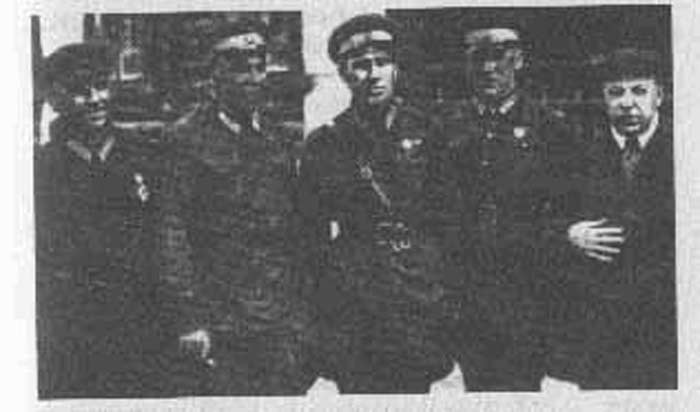 On 26 June 1935, the USSR-1-bis stratospheric balloon took off with a crew consisting of K. Ya. Zille, Yuri Prilutsky and Alexander Verigo.
After completing their scientific program, the crew began descending and discovered that the balloon envelope had been damaged. Once the balloon entered the lower atmosphere and it became safe to open the hatch, Prilutsky and Verigo evacuated the gondola by parachute.
Zille remained aboard and managed to land the lighter gondola safely. The incident demonstrated the risks faced by early stratospheric research teams, whose flights combined scientific experimentation with relatively primitive life-support and emergency systems.
9 Gary Powers
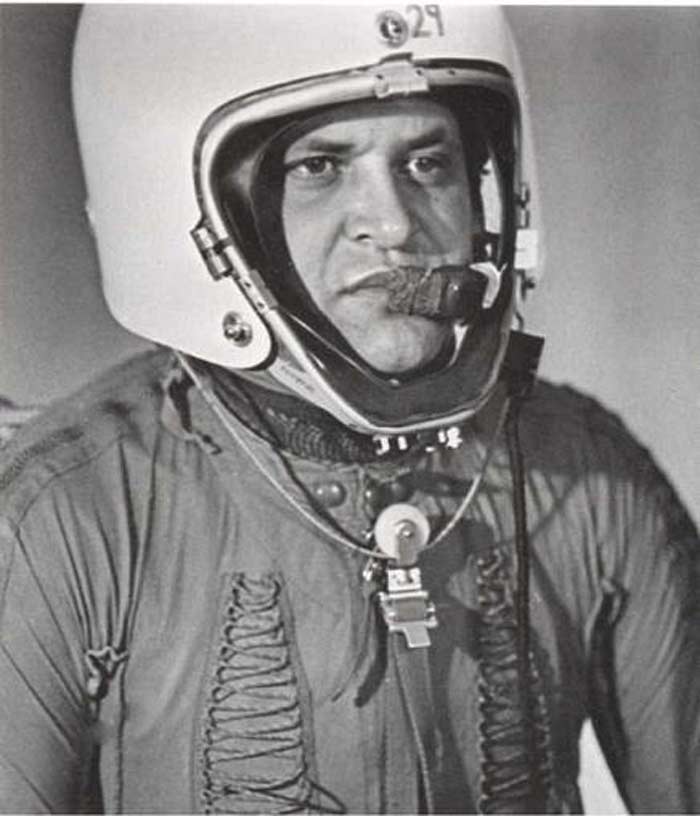 Gary Powers was an American pilot who conducted reconnaissance missions for the CIA. On 1 May 1960, his U-2 spy plane was shot down by a Soviet surface-to-air missile near Sverdlovsk, at an altitude of approximately 20 kilometers.
The missile severely damaged the aircraft, which began to descend uncontrollably. Powers eventually escaped from the aircraft and parachuted to the ground, where he was captured by Soviet authorities.
Although this was a famous high-altitude bailout, it was not a planned stratospheric parachute jump. It belongs in this list only as a related example of the dangers faced by pilots operating near the stratosphere. Powers was later convicted of espionage in the Soviet Union and exchanged for Soviet intelligence officer Rudolf Abel in 1962.
10 Michel Fournier
 French parachutist Michel Fournier spent years attempting to organize a jump from approximately 40,000 meters, aiming to set new records for high-altitude freefall.
In May 2008, his planned attempt in Canada ended when the helium balloon detached from its capsule during preparations and drifted away without him. Earlier attempts had also been unsuccessful, including one disrupted by strong winds.
Fournier’s project was among the most ambitious high-altitude parachuting efforts of its time. However, he never completed the planned jump from 40,000 meters, and the record was ultimately achieved by Felix Baumgartner in 2012 from an altitude of 38,969.4 meters.