Before human spaceflight became possible, scientists sent animals into space to study the effects of weightlessness, radiation and launch conditions on living organisms. From dogs and monkeys to tiny insects, these pioneering space travellers helped shape our understanding of space biology.
1 Dogs

Dogs were among the earliest animals used in spaceflight research, with missions conducted by several countries. Laika became the first animal to orbit Earth in 1957, while Belka and Strelka made history in 1960 by returning alive from an orbital mission.
2 Monkeys and chimpanzees
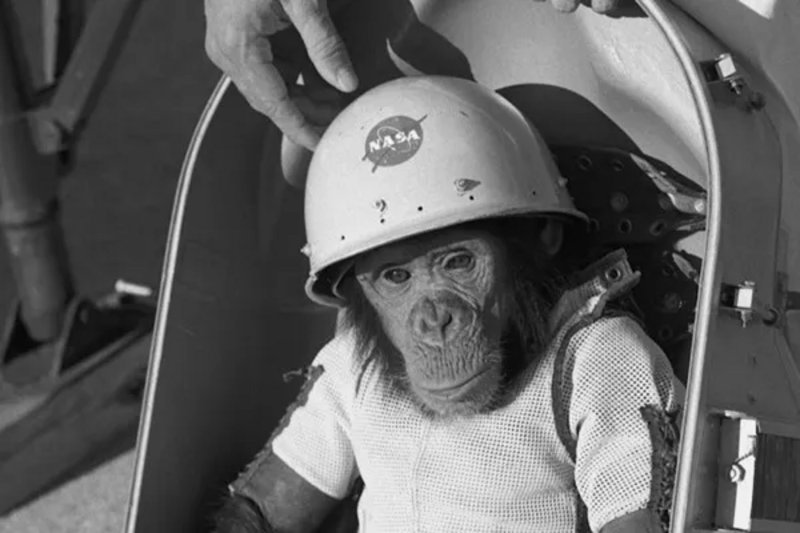
The United States and other space programmes sent monkeys and chimpanzees on early flights to study how acceleration and weightlessness affected the body. Ham the chimpanzee completed a successful suborbital flight in 1961, before the first American human spaceflight.
3 Rats
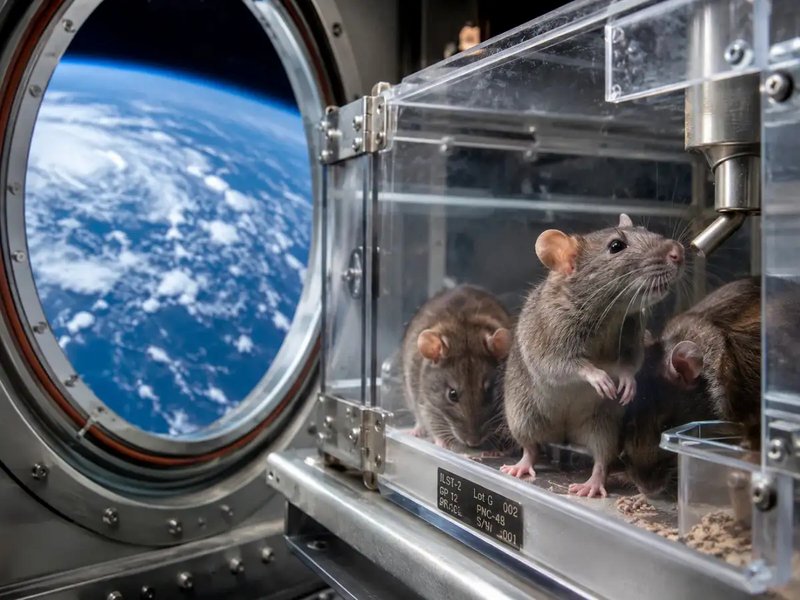
Rats have travelled on numerous space missions to help scientists investigate changes in muscles, bones, reproduction and other biological processes. They remain valuable research animals because many aspects of their physiology can be compared with human biology.
4 Mice

Mice have flown on space missions since the early days of rocketry and are still used to study how microgravity affects the body. Their short lifespans and well-studied genetics make them particularly useful for biomedical experiments.
5 Tortoises

In 1968, two steppe tortoises travelled around the Moon aboard the Zond 5 spacecraft, becoming the first animals to make a circumlunar journey. The spacecraft returned to Earth and was recovered from the Indian Ocean.
6 Quail

Quail eggs and embryos have been studied in space to investigate how gravity affects development and balance. Experiments with newly hatched chicks also revealed the challenges young birds face when trying to orient themselves and move in microgravity.
7 Newts
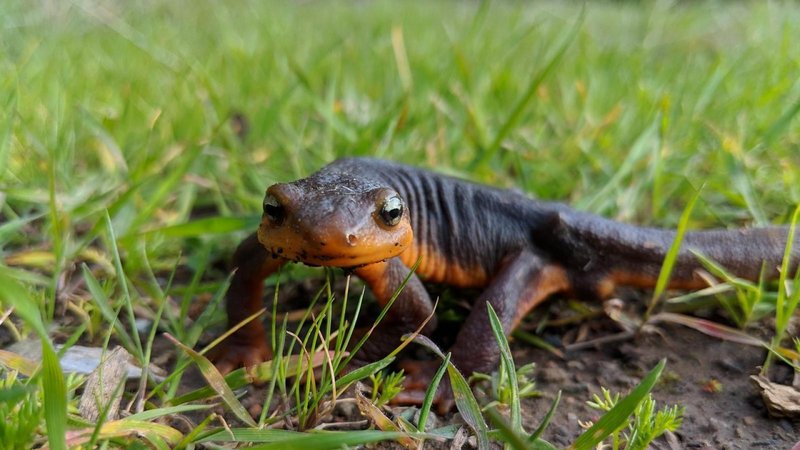
Newts have been sent into space to help researchers study development, regeneration and how living tissues respond to microgravity. Their ability to regenerate body parts makes them especially interesting for biological research.
8 Snails

Snails have flown on space experiments investigating how the nervous system and balance respond to altered gravity. Their relatively simple nervous systems make them useful subjects for studying basic biological processes.
9 Mealworms
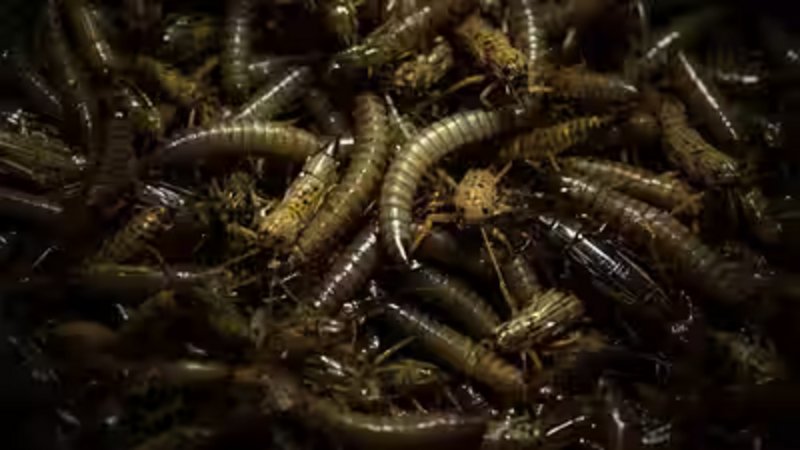
Mealworms travelled aboard the Zond 5 mission in 1968 as part of a biological payload sent around the Moon. Insects and their larvae have also been used in other experiments examining how living organisms respond to spaceflight.
10 Fruit flies

Fruit flies became the first animals sent into space and recovered alive when the United States launched them on a rocket in 1947. Their short life cycle and genetic similarities to humans have made them an important model for space biology ever since.