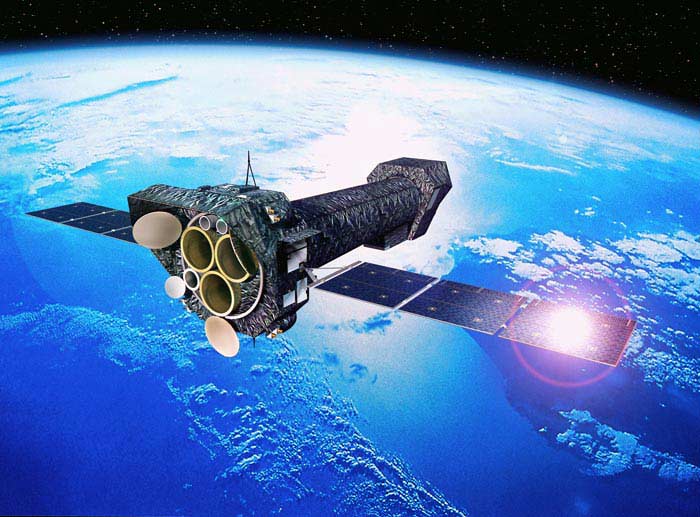
For centuries, humans have considered themselves the “crown of creation,” proudly believing in their superiority and treating the environment as though the planet belonged to them. Yet nature repeatedly reminds us of the limits of human power. The devastating toll of natural disasters is a sobering reminder that even the most advanced societies remain vulnerable to the forces of the Earth.
1 Earthquakes
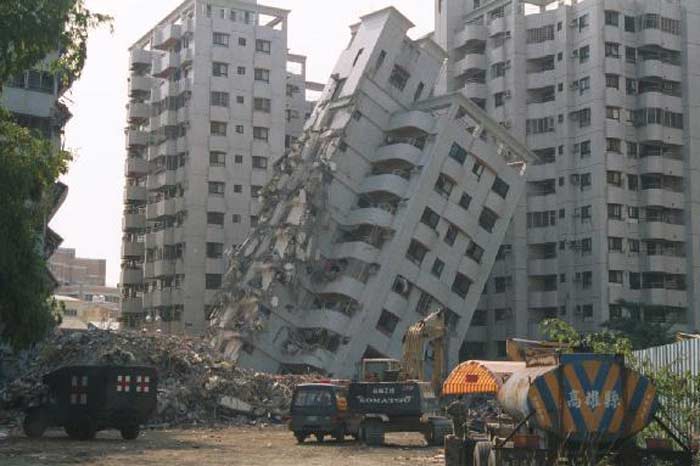
Earthquakes are sudden movements of the ground caused primarily by the release of stress along geological faults, often where tectonic plates interact. Hundreds of thousands of earthquakes occur worldwide each year, although most are too small to cause serious damage. The 1556 Shaanxi earthquake in China is traditionally associated with an estimated 830,000 deaths, making it one of the deadliest earthquakes in recorded history. However, historical estimates include indirect deaths and population losses, so the precise number remains uncertain. By comparison, the magnitude 9.0 earthquake that struck Japan on March 11, 2011, triggered a devastating tsunami and led to approximately 18,500 people being killed or reported missing.
2 Tsunamis
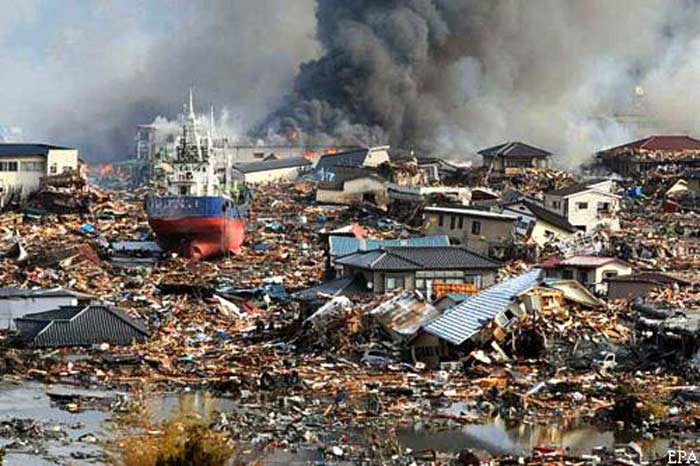
A tsunami is a series of powerful waves usually caused by an underwater earthquake, although volcanic eruptions and submarine landslides can also trigger one. Unlike ordinary wind-driven waves, tsunamis can travel across entire ocean basins and cause catastrophic flooding when they reach the coast. The Indian Ocean tsunami of December 26, 2004, was one of the deadliest natural disasters in modern history, killing approximately 230,000 people across several countries. The tallest recorded tsunami run-up occurred in Alaska’s Lituya Bay in 1958, when a landslide generated a wave that reached an elevation of about 524 meters on the surrounding slope. This was an exceptional local event, not a wave of that height traveling across the open ocean.
3 Droughts
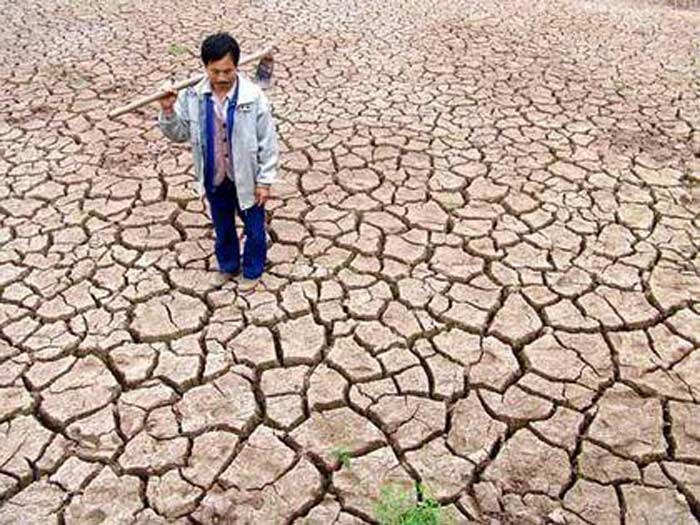
A drought is a prolonged period of unusually low precipitation that leads to water shortages, crop failures and damage to ecosystems. High temperatures can make its effects even worse. One of the most devastating droughts of the 20th century affected the Sahel region of Africa, the semi-arid belt south of the Sahara Desert, during the late 1960s and early 1970s. The crisis caused widespread famine, livestock losses and displacement. Estimates suggest that drought-related deaths during these years ranged from 100,000 to 250,000, although the full toll is difficult to establish because disease and malnutrition also contributed to the disaster.
4 Floods

Floods occur when water inundates normally dry land, often because of heavy rainfall, overflowing rivers, storm surges or rapidly melting snow. They can destroy homes, roads, farmland and essential infrastructure, while contaminated water can lead to disease outbreaks. In 2010, catastrophic flooding affected large parts of Pakistan after exceptionally heavy monsoon rains caused the Indus River system to overflow. Around 20 million people were affected, millions lost their homes or livelihoods, and more than 1,700 people died. The disaster caused enormous economic damage and exposed the vulnerability of communities living in flood-prone areas.
5 Landslides
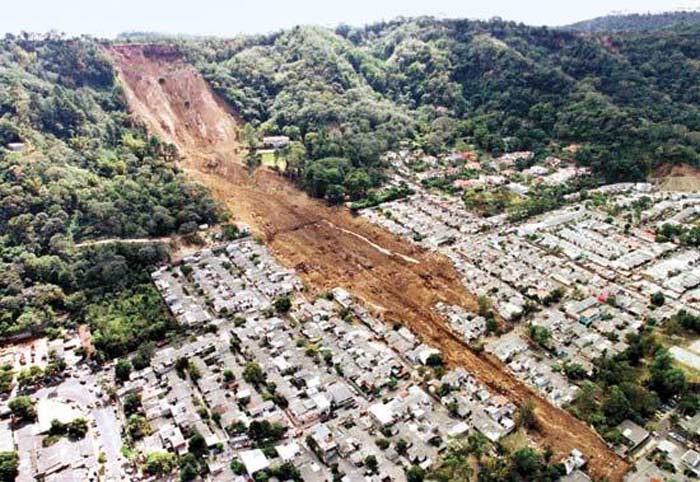
A landslide occurs when rock, soil or debris moves down a slope under the force of gravity. Heavy rainfall, earthquakes, volcanic activity and human activities such as deforestation can trigger these events. Some landslides move slowly, while others become fast-moving avalanches of mud, rock and debris capable of burying entire settlements. One of the deadliest examples occurred during China’s 1920 Haiyuan earthquake, which triggered thousands of landslides in the region’s loose loess soils. Landslides accounted for a substantial share of the disaster’s enormous death toll, although the frequently quoted figure of 180,000 deaths refers neither to a single landslide nor to a reliably isolated landslide death toll.
6 Volcanic eruptions
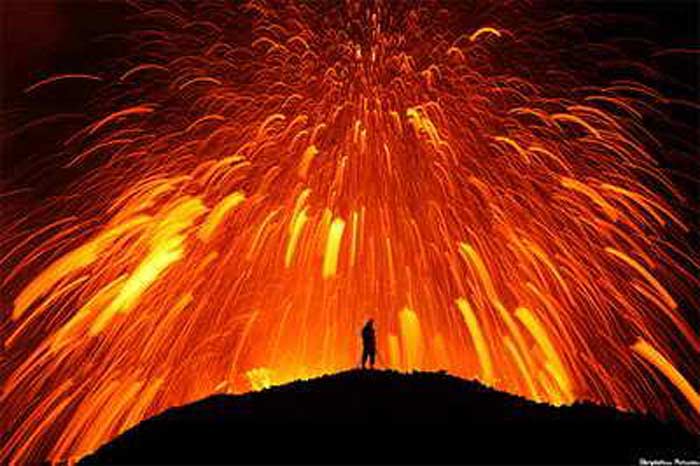
Volcanic eruptions occur when magma, gases and other materials rise from beneath Earth’s surface and escape through a volcano. They can produce lava flows, ash clouds, poisonous gases and devastating pyroclastic flows. One of the most powerful eruptions in recorded history occurred at Mount Tambora in Indonesia in April 1815. The eruption killed thousands of people directly, while famine and disease in the following months and years raised the estimated total death toll to around 70,000 or more, depending on the source and method of calculation. Ash and sulfur-rich aerosols injected into the atmosphere disrupted the global climate, contributing to the exceptionally cold and wet conditions of 1816, remembered as the “Year Without a Summer” in parts of Europe and North America.
7 Avalanches
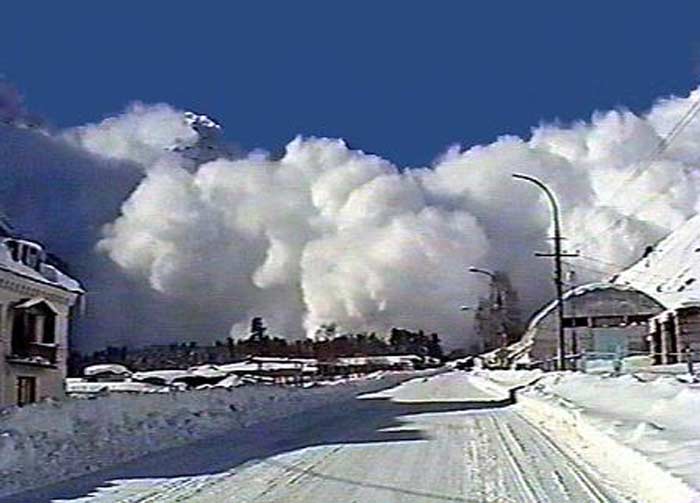
An avalanche is a rapid flow of snow down a mountain slope. It may be triggered by heavy snowfall, wind-loaded snow, changing temperatures or vibrations, although most avalanches occur because a layer of snow becomes unstable. During the First World War, avalanches killed thousands of soldiers in the Alps, particularly along the Italian-Austrian front. Artillery fire and explosions sometimes helped trigger them, but weather and unstable snowpack were also crucial factors. The exact number of avalanche deaths during the war is uncertain, and the often-repeated figure of 80,000 should not be treated as a firmly established total.
8 Hurricanes and tropical cyclones

Hurricanes, typhoons and tropical cyclones are different regional names for the same type of powerful storm system. They form over warm ocean waters and can bring destructive winds, torrential rain and storm surges that flood coastal communities. Hurricane Katrina struck the Gulf Coast of the United States in August 2005 and caused catastrophic damage, especially in Louisiana and Mississippi. Levees and floodwalls failed in the New Orleans area, leaving large parts of the city underwater. Katrina caused an estimated 1,392 deaths and approximately $125 billion in damage in 2005 dollars, making it one of the costliest hurricanes in US history.
9 Tornadoes
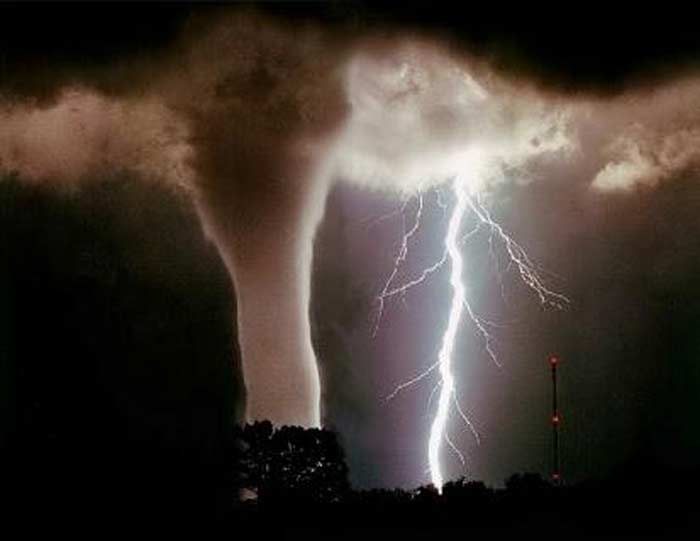
A tornado is a violently rotating column of air extending from a thunderstorm to the ground. Tornadoes can destroy buildings, overturn vehicles and turn debris into dangerous projectiles. The central United States experiences frequent tornadoes because warm, moist air from the Gulf of Mexico can meet cooler, drier air from other regions. In April 2011, a series of severe tornado outbreaks swept across the southeastern United States. Alabama was particularly hard hit, and the overall outbreak killed more than 300 people. The strongest tornadoes can produce estimated wind speeds exceeding 480 km/h, but claims of winds reaching 1,300 km/h inside a tornado are not scientifically supported.
10 Sand and dust storms
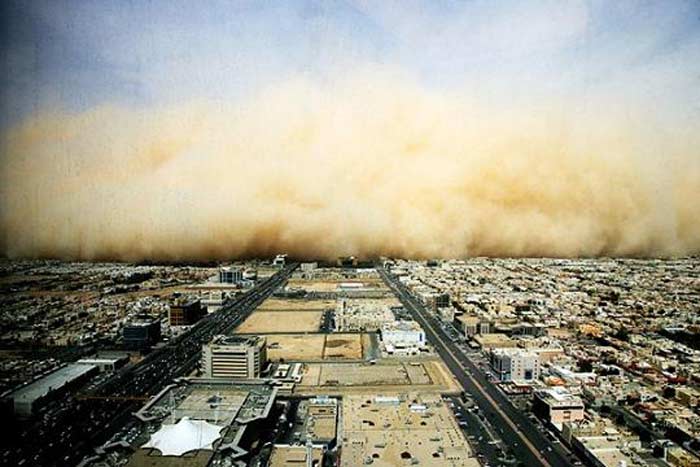
Sand and dust storms occur when strong winds lift sand, dust and other loose particles from dry ground and carry them through the atmosphere. They can reduce visibility to almost zero, disrupt transportation, damage crops and cause serious respiratory problems. In extreme cases, they can endanger the lives of people caught outdoors in remote deserts. An ancient account by the Greek historian Herodotus describes how an army of approximately 50,000 Persian soldiers sent by King Cambyses II toward the Siwa Oasis in Egypt supposedly disappeared in a sandstorm around 525 BCE. The story has never been conclusively verified, and historians debate whether the army was actually lost in a storm. It remains a famous historical legend rather than a confirmed example of 50,000 deaths caused by a sandstorm.