Space telescopes are astronomical observatories operating above Earth’s atmosphere. Why are they needed? Earth’s atmosphere absorbs or distorts much of the electromagnetic radiation coming from space, while observations across different wavelengths allow astronomers and astrophysicists to study stars, planets, galaxies, black holes, asteroids and many other celestial objects. Space telescopes have made enormous contributions to the discovery and study of distant worlds and to our understanding of potential hazards such as near-Earth asteroids and comets. Let’s take a look at some of the most influential space telescopes of the modern era!
1Hubble Space Telescope
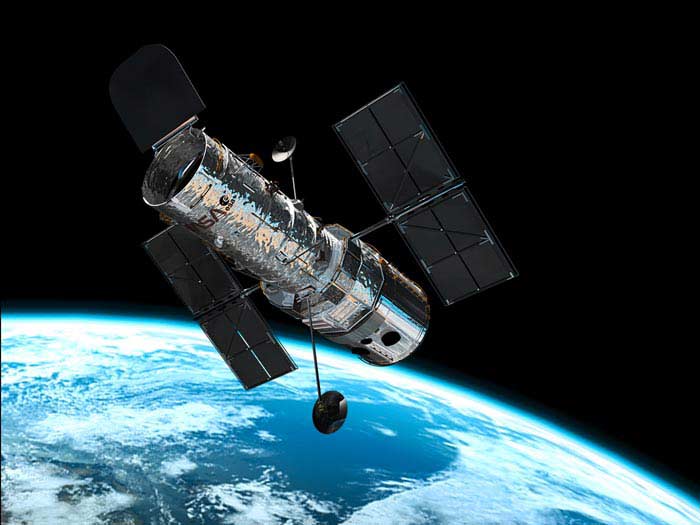
The space telescope named after American astronomer Edwin Hubble was launched in 1990 and became one of the most important orbital observatories ever built. Its primary mirror is 2.4 meters in diameter, smaller than the mirrors of many large ground-based telescopes, but its position above Earth’s atmosphere gives it an exceptionally clear view of the universe. Hubble can observe ultraviolet, visible and near-infrared light without the blurring effects of atmospheric turbulence.
2Compton Gamma Ray Observatory
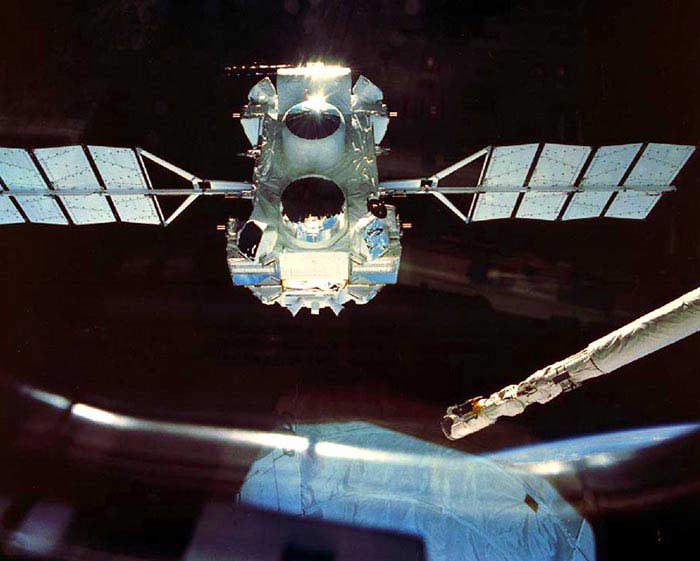
Launched in 1991, the Compton Gamma Ray Observatory was designed to study the universe in gamma rays, the most energetic form of electromagnetic radiation. Its targets included pulsars, quasars, supernovae, black holes and other extremely energetic phenomena. During its nearly 10 years in orbit, Compton detected more than 400 celestial gamma-ray sources, compared with about 40 known before its launch, and recorded more than 2,500 gamma-ray bursts. The observatory was deliberately re-entered into Earth’s atmosphere in 2000 after a gyroscope failure.
3Kepler Space Telescope
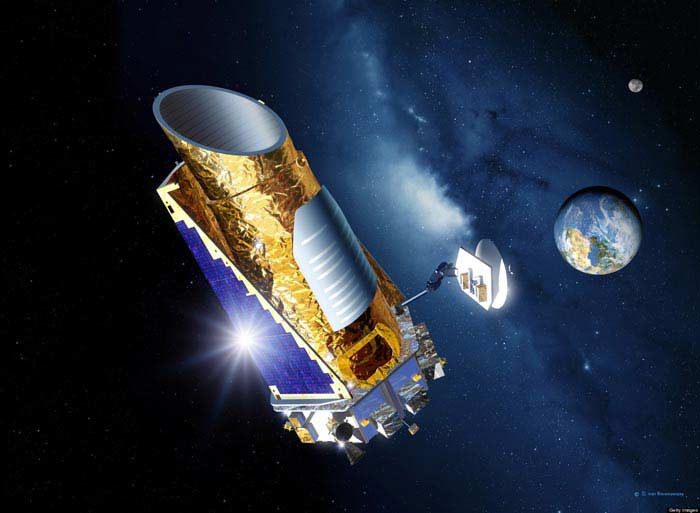
Launched in 2009, Kepler was designed to search for planets orbiting other stars by detecting tiny changes in their brightness as planets passed in front of them. Its results transformed our understanding of planetary systems: during its nine-year mission, Kepler discovered more than 2,600 confirmed planets outside our Solar System, along with thousands of additional candidates. The spacecraft did not fail in 2013 as originally expected; after its primary mission ended, it continued working as part of the extended K2 mission. Kepler finally ran out of fuel and was retired in October 2018.
4Spitzer Space Telescope
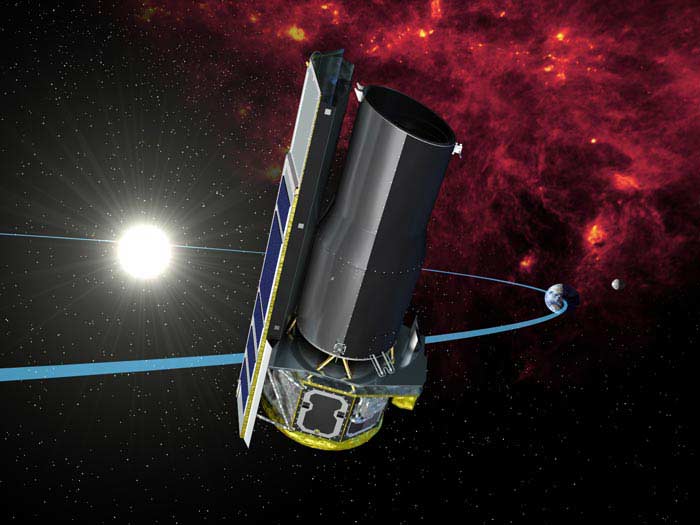
Launched in 2003, Spitzer was designed to study the universe in infrared light. Many infrared wavelengths are absorbed by Earth’s atmosphere, so observing from space allowed Spitzer to detect objects and phenomena that are difficult or impossible to study from the ground. The telescope studied stars and planets in the making, distant galaxies, asteroids and comets, and exoplanets. Among its achievements was the discovery of a previously unknown ring around Saturn and the study of the seven Earth-sized planets in the TRAPPIST-1 system. Spitzer operated for more than 16 years before its mission ended in January 2020.
5Chandra X-ray Observatory
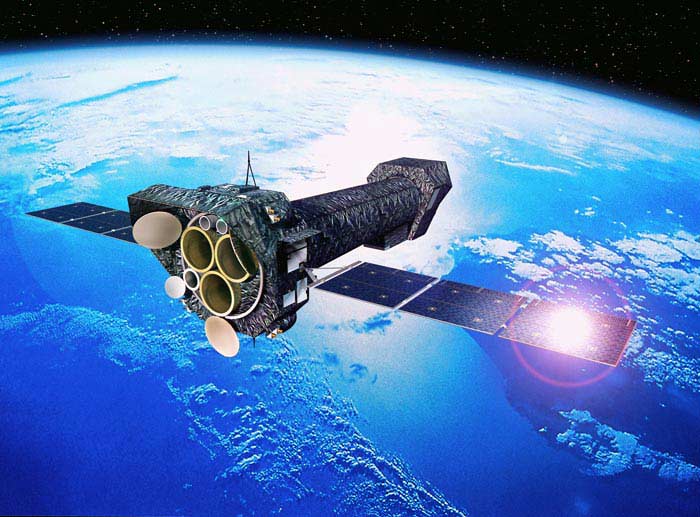
Since 1999, the Chandra X-ray Observatory has been observing the universe in X-rays. Unlike visible light, X-rays are produced by some of the hottest and most energetic objects and events in the cosmos, including black holes, neutron stars, supernova remnants and superheated gas. Chandra combines high sensitivity with extremely sharp X-ray imaging, allowing scientists to study faint and distant sources in remarkable detail. Its observations have helped answer fundamental questions about stars, galaxies, black holes and the evolution of the universe.
6WISE Space Telescope
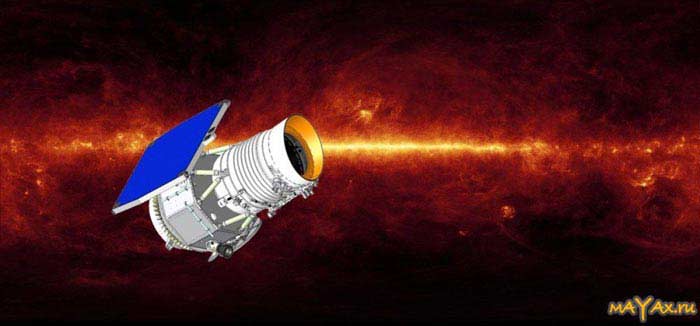
NASA launched the Wide-field Infrared Survey Explorer, or WISE, in 2009 to survey the entire sky in infrared light. It produced millions of images and detected objects ranging from distant galaxies to asteroids relatively close to Earth. After its original mission ended, the spacecraft was reactivated as NEOWISE in 2013 to search specifically for near-Earth asteroids and comets. During its various missions, WISE and NEOWISE contributed substantially to our knowledge of asteroids, comets, brown dwarfs and other infrared objects.
7Herschel Space Observatory

The concept for this European observatory was developed over many years before the spacecraft was finally launched in 2009. Herschel studied far-infrared and submillimetre radiation from objects in our Solar System, the Milky Way and extremely distant galaxies. Its 3.5-meter primary mirror was the largest telescope ever launched into space at the time, allowing scientists to investigate cold dust, star-forming regions and planet-forming discs that are difficult to observe at other wavelengths. Herschel provided a remarkable view of some of the coldest and most distant regions of the universe.
8Planck Space Observatory

The Planck space observatory, another European Space Agency mission, studied tiny variations in the cosmic microwave background — the faint relic radiation left over from the early universe. Launched in 2009, Planck continued its scientific observations until 2013. Its measurements provided one of the most precise pictures yet of the early universe and helped scientists determine its composition and age. Planck’s results estimated the age of the universe at about 13.8 billion years and refined estimates of the proportions of ordinary matter, dark matter and dark energy.
9CoRoT Space Telescope
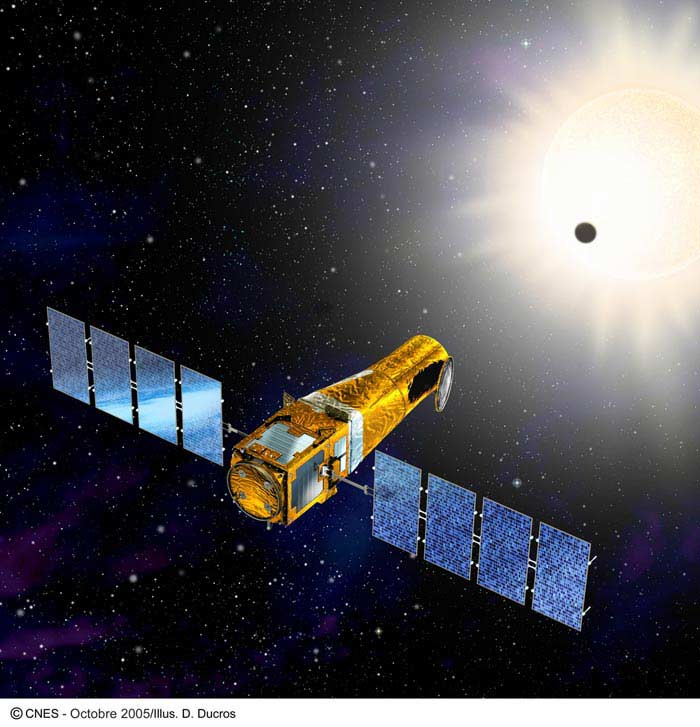
CoRoT was an international space mission led by France’s CNES with participation from ESA, Austria, Belgium, Brazil, Germany and Spain. Launched in 2006, the telescope had two main goals: searching for exoplanets by detecting planetary transits and studying the internal structure of stars through asteroseismology. CoRoT observed around 160,000 stars and became a pioneer in the search for relatively small exoplanets. The mission was finally decommissioned in 2014 after more than seven years in orbit. According to CNES, 34 exoplanets were confirmed and studied in detail using its observations.
10GALEX Space Telescope
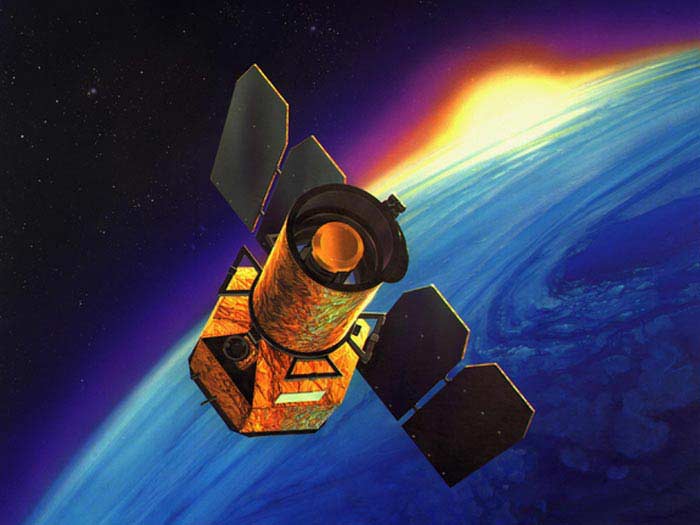
Launched in 2003, the Galaxy Evolution Explorer, or GALEX, studied galaxies and stars in ultraviolet light. Its observations helped astronomers investigate how galaxies formed and evolved and how rapidly new stars were being born throughout cosmic history. GALEX also contributed to studies of phenomena such as black holes and the evolution of stars. The mission was extended several times and finally ended in 2013, after about a decade of observations.
The advantages of orbital observatories are undeniable, and their discoveries have been invaluable to both modern astronomy and the science of the future. From the first space observatories to today’s increasingly powerful instruments, each new mission has opened another window onto the universe. And with new generations of space telescopes continuing to explore the cosmos, it seems that we are still only at the beginning of some truly extraordinary discoveries!