Annexation (from the Latin *annectere*, meaning “to join”) is the unilateral incorporation by one state of all or part of another state’s territory. Unlike occupation, which refers to effective control over territory by a foreign military, annexation asserts that the territory has become part of the annexing state. An occupation may precede an attempted annexation, but the two are not the same.
Under modern international law, the acquisition of territory by force is prohibited. Annexations resulting from the unlawful use of force are generally considered invalid and may entail international responsibility.
Here are ten notable cases of territorial annexation or attempted annexation in modern history.
1 Iraq’s annexation of Kuwait – 1990
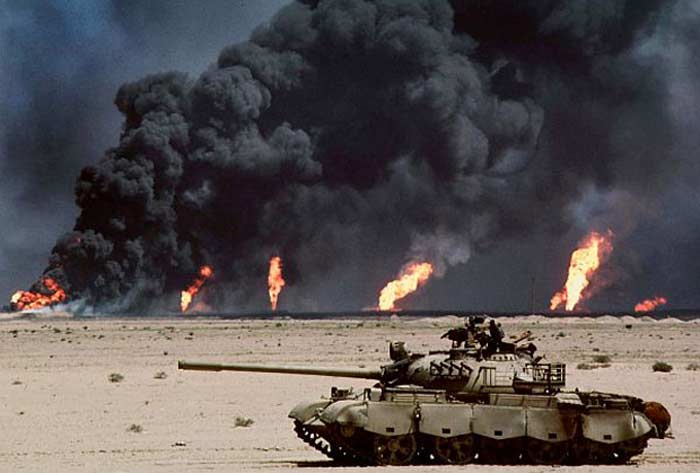
In July 1990, Iraqi President Saddam Hussein accused Kuwait of exceeding its oil production quotas and demanded compensation for what Iraq claimed was the unauthorized extraction of oil from a disputed field. Iraq also sought relief from its substantial debts. After negotiations failed, Iraqi forces invaded Kuwait on 2 August 1990. On 8 August, Iraq declared Kuwait its nineteenth province. The United Nations Security Council rejected the annexation as invalid and demanded that Iraq withdraw its forces and reverse its actions. Kuwait was liberated in February 1991 following an international military campaign. The invasion became one of the defining international crises of the early 1990s.
2 Israel’s annexation of the Golan Heights – 1981

Israel captured the Golan Heights from Syria during the Six-Day War in June 1967. On 14 December 1981, the Israeli Knesset passed legislation extending Israeli law, jurisdiction and administration to the territory, effectively annexing it. The United Nations Security Council unanimously adopted Resolution 497, declaring the Israeli decision null and void and without international legal effect. The Golan Heights remains internationally recognized as Syrian territory occupied by Israel, although Israel continues to administer it.
3 India’s incorporation of Sikkim – 1975

Sikkim was a Himalayan kingdom that became an Indian protectorate in 1950 while retaining its monarchy and internal government. Political tensions and a growing movement against the monarchy led to major changes in 1975. Indian troops took control of the palace guard, and a referendum held on 14 April overwhelmingly supported abolishing the monarchy and joining India. The vote was conducted under circumstances involving a strong Indian military presence and remains a subject of historical debate. On 16 May 1975, Sikkim formally became a state of India.
4 Israel’s annexation of East Jerusalem – 1967-1980
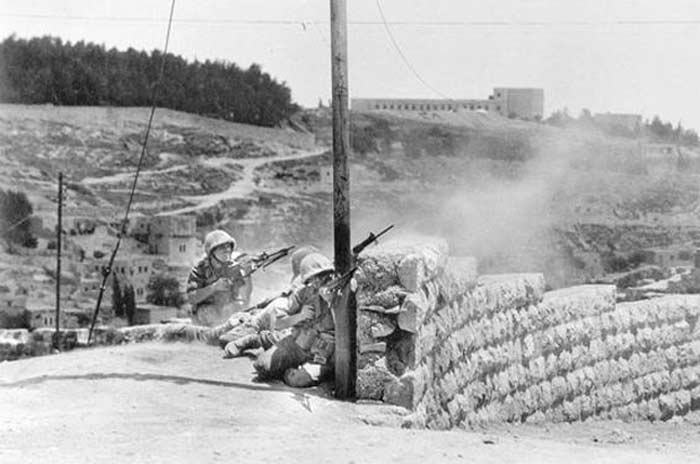
During the Six-Day War in June 1967, Israel captured East Jerusalem, which had been under Jordanian control. Israel subsequently expanded Jerusalem’s municipal boundaries and extended its laws and administration to the occupied area. In 1980, the Knesset adopted the Jerusalem Law, declaring Jerusalem the complete and united capital of Israel. The United Nations Security Council rejected measures intended to change the city’s status, and East Jerusalem is internationally recognized as occupied Palestinian territory. The war also brought the West Bank, Gaza Strip, Sinai Peninsula and Golan Heights under Israeli control, although their subsequent histories differed.
5 India’s annexation of Portuguese India – 1961
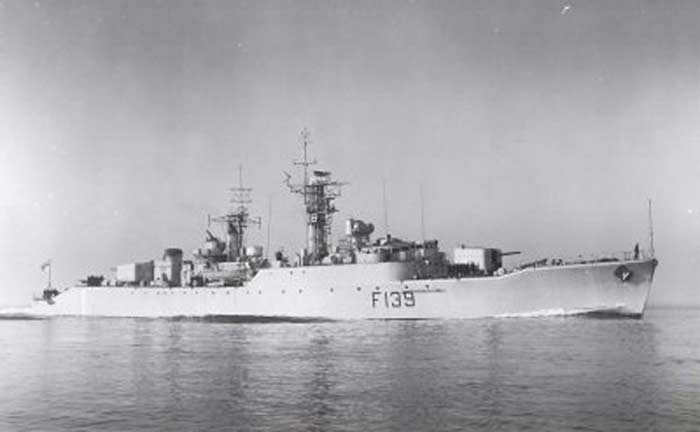
In December 1961, India launched Operation Vijay, a military operation against Portugal’s remaining territories on the Indian subcontinent: Goa, Daman and Diu. Portuguese rule in Goa had begun in 1510, making it one of Europe’s longest-lasting colonial possessions in Asia. After approximately 36 hours of fighting, Portuguese forces surrendered on 19 December 1961. India incorporated the territories into its administration, ending more than four centuries of Portuguese rule in Goa. India described the operation as liberation from colonial rule, while Portugal regarded it as an invasion and annexation. Goa became a separate Indian state in 1987.
6 The United Kingdom’s annexation of Rockall – 1955
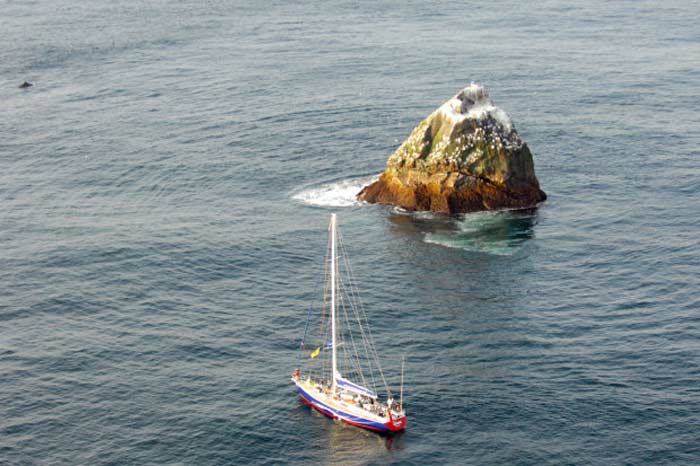
Rockall is a tiny, uninhabited rocky islet in the North Atlantic Ocean. On 18 September 1955, a British naval party landed on it and formally proclaimed British sovereignty. The United Kingdom incorporated Rockall into Scotland under the Island of Rockall Act 1972. Ireland has not recognized the UK’s sovereignty claim, although it has not claimed sovereignty over the rock itself. Denmark and Iceland have also been involved in disputes concerning the surrounding maritime areas. Under the United Nations Convention on the Law of the Sea, a rock that cannot sustain human habitation or an economic life of its own does not generate its own exclusive economic zone or continental shelf.
7 The Soviet annexation of the Baltic states – 1940

The secret protocol to the German-Soviet Non-Aggression Pact, signed on 23 August 1939, divided much of Eastern Europe into German and Soviet spheres of influence. Estonia, Latvia and initially much of Lithuania fell within the Soviet sphere. In 1940, after imposing military bases and issuing ultimatums, the Soviet Union occupied all three Baltic states. Soviet-backed governments were installed, followed by elections held under Soviet control and requests to join the USSR. The Soviet Union incorporated Estonia, Latvia and Lithuania as Soviet republics in August 1940. Many Western countries did not recognize the annexation de jure, and the three states restored their independence in 1991.
8 Germany’s annexation of the Sudetenland – 1938

In September 1938, Nazi Germany, Britain, France and Italy signed the Munich Agreement, allowing Germany to take the Sudetenland, a border region of Czechoslovakia with a large ethnic German population. Czechoslovakia was excluded from the decisive negotiations and faced intense pressure to accept the agreement. German troops occupied the Sudetenland in October 1938. In March 1939, Germany occupied the remaining Czech lands and established the Protectorate of Bohemia and Moravia, while Slovakia became a nominally independent state under German influence. The annexation of the Sudetenland was therefore an important step toward the destruction of Czechoslovak independence.
9 Germany’s annexation of Austria – 1938
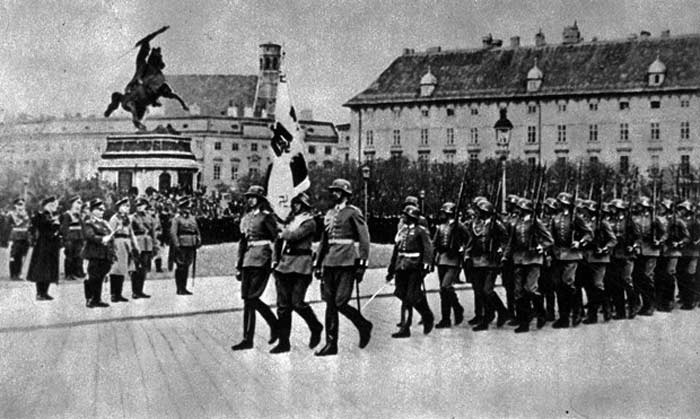
On 12 March 1938, German troops entered Austria, and the country was incorporated into Nazi Germany in an event known as the *Anschluss*. The following day, a law formally declared Austria part of the German Reich. The annexation added approximately 6.7 million people to Germany’s population and expanded its territory and economic resources. Although the Nazi regime later organized a referendum that reported overwhelming support for the union, the vote took place under authoritarian conditions and cannot be regarded as a free and fair expression of public opinion. Austria’s independence was restored after the Second World War, with the Austrian State Treaty of 1955 establishing the basis for its full sovereignty.
10 Romania’s incorporation of Bessarabia – 1918

Bessarabia, a region between the Prut and Dniester rivers, had been part of the Russian Empire since 1812. Following the Russian Revolution of 1917, the region declared autonomy and later proclaimed the Moldavian Democratic Republic. On 27 March 1918, its legislative assembly voted to unite with Romania, subject to conditions that were subsequently changed or removed. The union took place amid political instability and the presence of Romanian troops, and its legitimacy was disputed by Soviet Russia. In 1940, the Soviet Union issued an ultimatum to Romania and occupied Bessarabia, incorporating most of the territory into the Moldavian Soviet Socialist Republic and the Ukrainian Soviet Socialist Republic. The region’s history illustrates why the terms *annexation*, *union* and *incorporation* must be used with care and in their historical context.
Territorial annexations have repeatedly undermined international security, particularly when states have used military force or coercion to alter internationally recognized borders. The Soviet Union described its incorporation of the Baltic states and other territories in 1939-1940 as accession or reunification, while many affected populations and Western governments regarded those events as occupation and annexation.
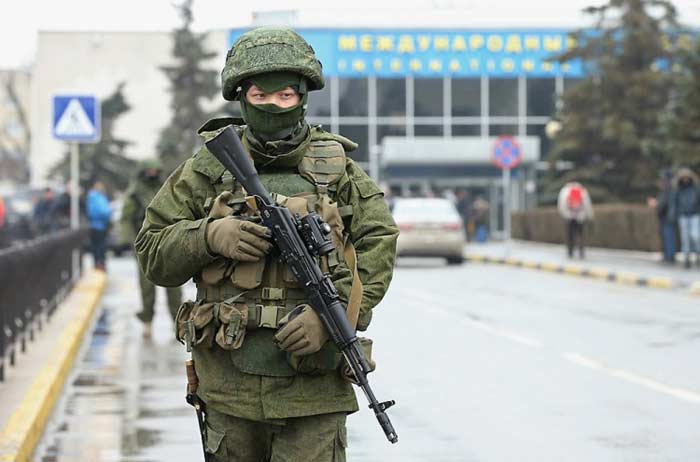
A more recent example is Russia’s annexation of Crimea in 2014, following the deployment of Russian forces and a referendum held under military occupation. The United Nations General Assembly affirmed Ukraine’s territorial integrity and called on states not to recognize a change in Crimea’s status. Russia also declared the annexation of four additional Ukrainian regions in 2022, moves widely condemned internationally as illegal. These cases demonstrate why the distinction between a state’s official claims and international legal recognition remains essential when examining territorial disputes.